
Emergency Response to Long-term Long-Term Flood Risk Management in Jasper National Park
CN Railway | Snake Indian River, Jasper National Park, Alberta
Technical & Regulatory Support + Project Control Support
Overview
What began as an emergency response to winter flooding along CN Railway's infrastructure evolved into a complex, near decade long environmental and infrastructure project within Jasper National Park.
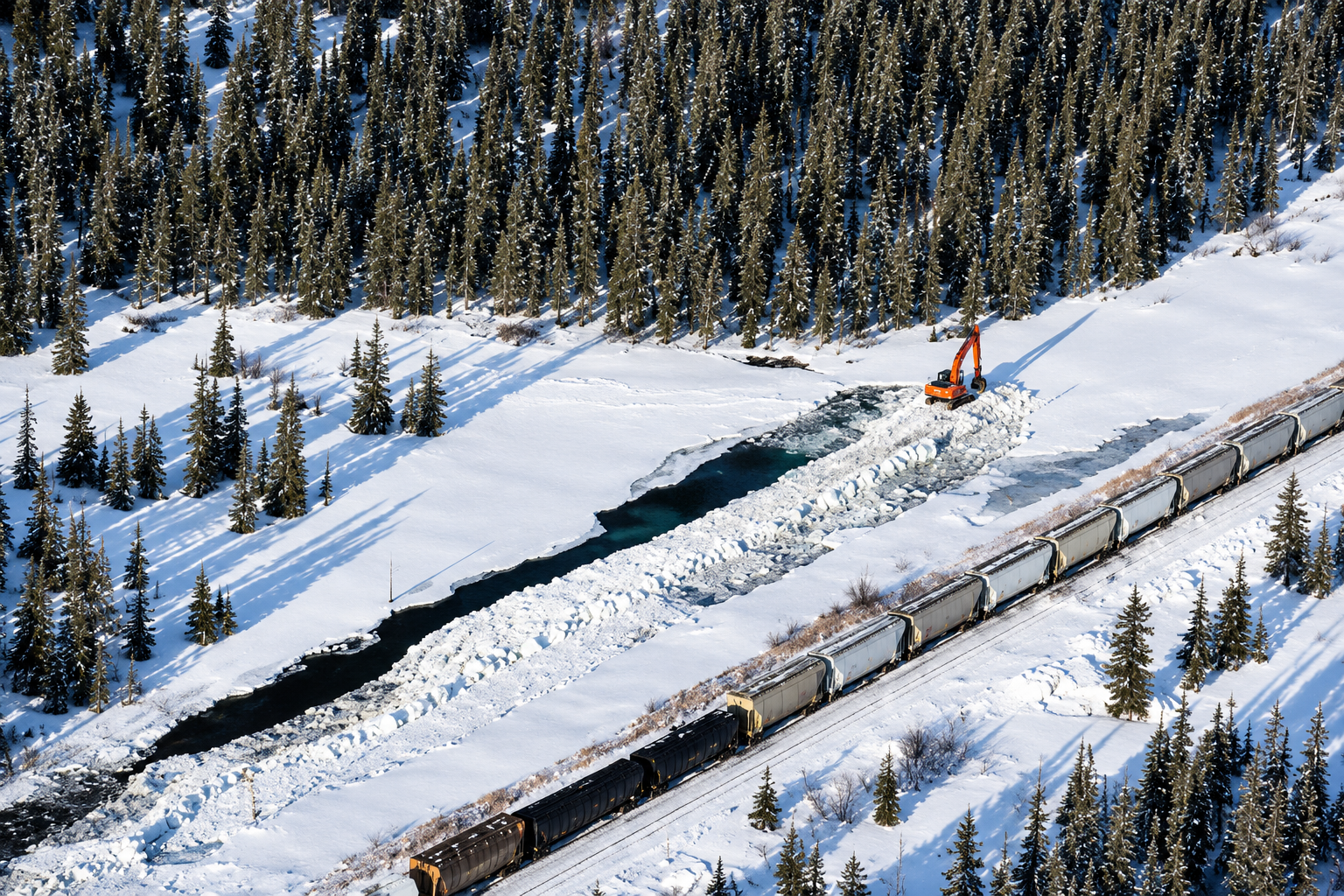
In December 2016, the Snake Indian River overtopped its banks at multiple locations, redirecting water and ice toward the railway and activating several railway culverts. Cornice initially supported the technical and environmental response, including field investigation, fish and fish habitat assessment, environmental planning, regulatory submissions, and the development and assessment of long-term flood mitigation options.
As the project progressed, long-term mitigation required coordination between environmental, engineering, hydrotechnical, and geomorphological specialists; repeated design and alternatives analysis; ongoing field observations; and sustained engagement with CN, Parks Canada, and Fisheries and Oceans Canada.
As the project evolved, Cornice's technical and regulatory role expanded to include Project Control, maintaining continuity across years of changing conditions, technical information, regulatory direction, and project teams.
The Challenge
The Snake Indian River presented a recurring flood and avulsion risk to critical railway infrastructure within Jasper National Park.
Developing a long-term solution required balancing infrastructure protection with the environmental and policy requirements of a nationally protected landscape. The project was further complicated by dynamic river and ice conditions, recurring flood events, restricted access, fisheries considerations, wilderness-area constraints, material sourcing and transportation limitations, and an evolving technical and regulatory record.
Over multiple years, proposed mitigation concepts were assessed, challenged, refined, and redesigned as new field information, technical studies, and regulatory direction became available. The project progressed through alternatives analysis, environmental and engineering assessment, hydrotechnical modelling, geomorphological assessment, and successive design iterations.
Project Requirements
Manage and track potential for recurring winter ice-jam and seasonal flood risk
Protect critical operating railway infrastructure
Develop solutions appropriate to Jasper National Park
Protect fish and fish habitat
Navigate Parks Canada and DFO requirements
Address wilderness-area and land-use constraints
Work within challenging access and construction logistics
Evaluate multiple engineering and environmental alternatives
Adapt designs as technical information and regulatory direction evolved
Maintain a coherent technical and regulatory record across a long-duration project
Cornice Role
Cornice provided environmental and regulatory support from the initial emergency response through the development of long-term flood mitigation options. As the project expanded, our role grew to include coordination of technical disciplines, regulatory requirements, evolving designs, field information, and the project record needed to support ongoing decision-making.
Technical & Regulatory Support → Project Control in Practice
Cornice's involvement began with technical and regulatory support. As the project became more complex, that role expanded to include Project Control while maintaining the technical and regulatory support required throughout the project.
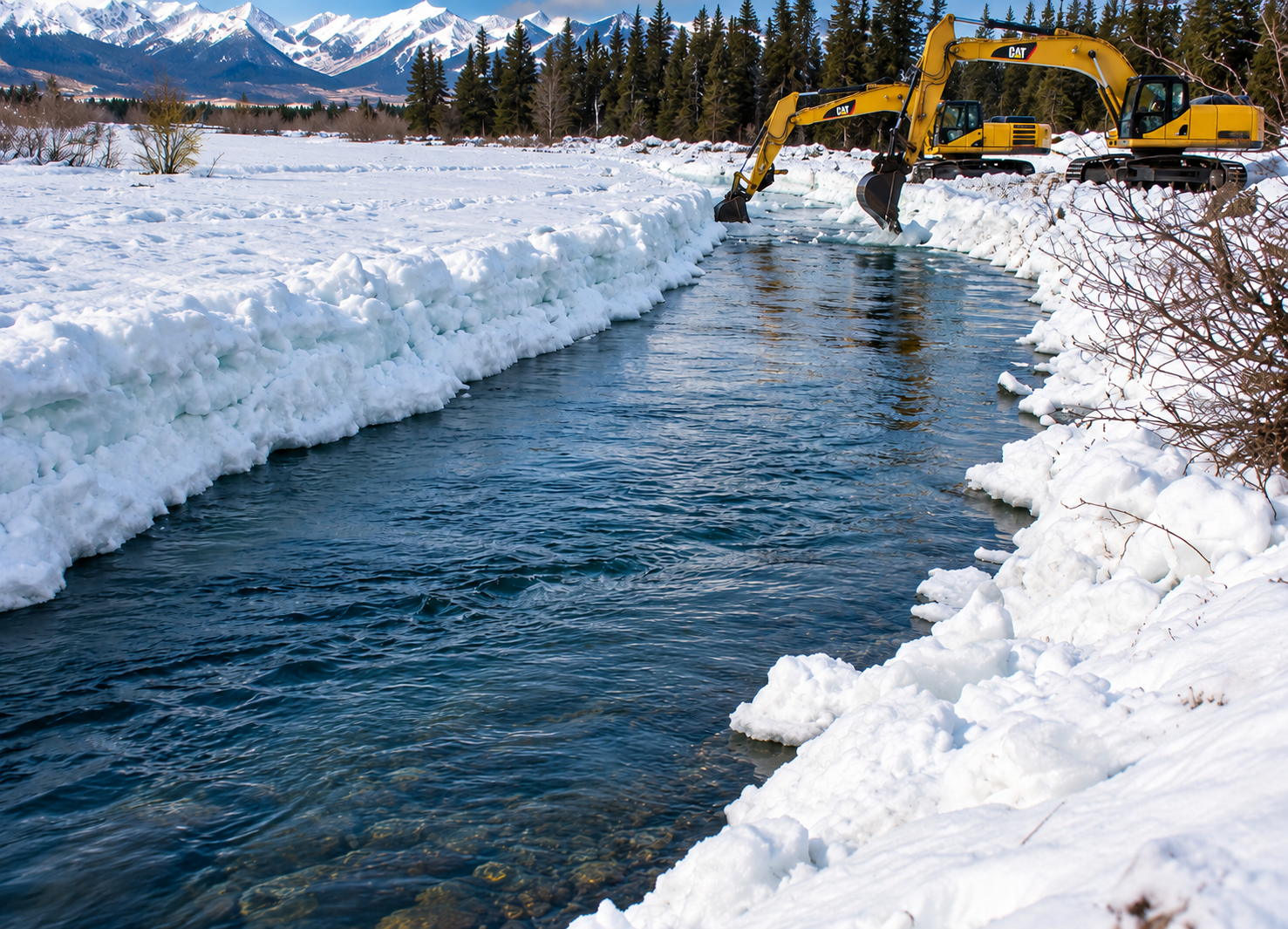
Excavators work to remove surface ice and reduce potential for ice jam.
Technical & Regulatory Support
Fish and fish habitat assessment
Environmental risk assessment and protection planning
Emergency works support and post-construction reporting
Regulatory submissions and responses
Environmental input into alternatives and design development
Field assessment of changing river, flood, and ice conditions
Project Control Support
Maintaining continuity across a multi-year project history
Integrating environmental, engineering, and specialist technical inputs
Tracking changing regulatory requirements and design responses
Coordinating information needed for successive project submissions
Connecting field observations and new technical information to project decisions
Supporting CN through an iterative approval and design process
Cornice's technical contribution is reflected in a project record spanning fish habitat assessment, environmental review and protection planning, emergency works reporting, alternatives assessment, flood and ice observations, revised mitigation planning, and successive Project Descriptions.
Outcome to date
Emergency flood-response measures implemented with environmental oversight
DFO subsequently confirmed that the 2016/2017 emergency works resulted in no harmful effects to fish or fish habitat requiring restoration
Long-term mitigation alternatives developed and repeatedly refined in response to field observations, technical studies, engineering requirements, and regulatory direction
Environmental, engineering, hydrotechnical, and geomorphological information integrated into an evolving project design and regulatory record
Project continuity maintained through recurring flood events, design iterations, specialist teams, regulatory submissions, and changes in project personnel
A consistent technical record and project rationale maintained through an extended Parks Canada review process
Long-term flood mitigation planning remains active, with Cornice continuing to support CN as regulatory discussions progress